


Prohibition of open-air burning 野焼きの禁止
- [公開日:2026年10月28日]
- [更新日:2026年10月28日]
- ID:17340
ソーシャルサイトへのリンクは別ウィンドウで開きます

Prohibition of open-air burning
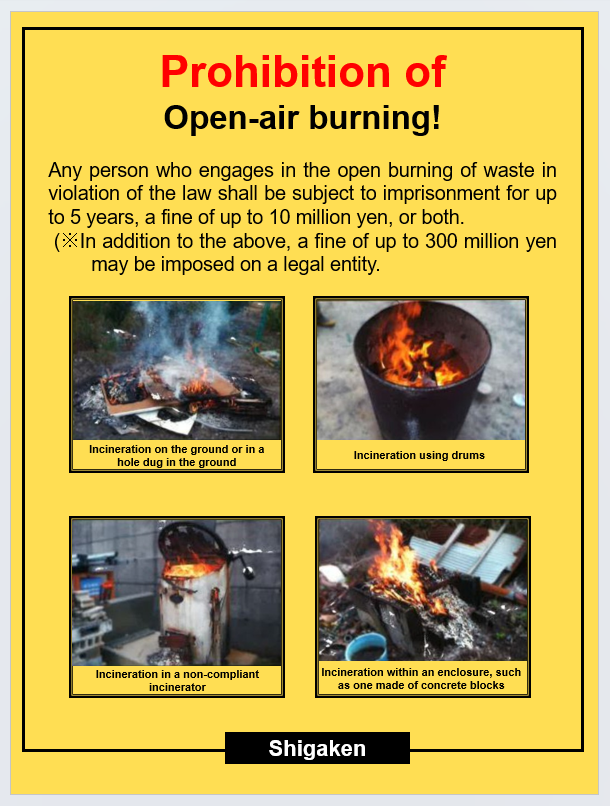
〈Penalties for Open Burning〉
Violations are punishable by law. Individuals who commit such acts may face up to 5 years of imprisonment, a fine of up to 10 million yen, or both. In the case of a corporation, a fine of up to 300 million yen may be imposed.
◆Examples of prohibited open-air waste burning:
Incineration on the ground or in a hole dug in the ground; Incineration using drums;
Incineration within an enclosure, such as one made of concrete blocks; Incineration in a non-compliant incinerator.
Burning waste not only leads to disputes with neighbors and a deterioration of the living environment due to smoke and unpleasant odors, but it can also generate hazardous substances—such as dioxins—that may pose risks to human health. While there are legal regulations concerning open-air burning, the most important consideration is ensuring that you do not cause a nuisance to those living nearby. Even in cases where open-air burning is permitted as an exception, if complaints are received from the surrounding area regarding smoke or odors, you may be required to stop the burning or receive instructions on how to carry it out properly.
〈Exceptions to the prohibition〉
■Incineration of waste necessary for the observance of local customs or religious events
Examples: Burning of items such as *kadomatsu* (traditional New Year pine decorations) or *shimenawa* (sacred straw ropes) during local events like *dondo-yaki* (a traditional New Year bonfire ritual)
■Incineration of waste that is unavoidable for the purpose of conducting agricultural, forestry, or fishing activities
Examples: Burning of rice straw or similar materials by farmers; burning of marine debris attached to fishing nets by those in the fishing industry
■Small-scale incineration of waste, such as open-air fires or other burning activities typically associated with daily life
Examples: Open-air fires, burning fallen leaves or firewood for warmth, barbecues
■Incineration of waste by the national or local government as necessary for the management of their facilities
■Incineration of waste necessary for the prevention of, emergency response to, or recovery from disasters—including earthquakes, storms, floods, fires, frost/freeze damage, or other similar events
Safety and Considerations
Burning straw or other materials in fields is permitted as an exceptional case, as it is sometimes unavoidable in the course of agricultural operations. However, in recent years, there has been an increase in complaints. Please, therefore, pay close attention to the following points:
■Informing Neighbors
If you plan to conduct open-air burning in your fields, please inform your neighbors in advance.
■Checking Weather Conditions
The risk of fire increases during periods of strong wind or dry weather; please refrain from burning waste or vegetation. Be mindful of the wind direction and take care to ensure that smoke does not drift toward residential homes.
■Fire Management
Do not leave the site until the fire has been completely extinguished.
■Choosing an Appropriate Time
Avoid open-air burning in the evening or later; please choose a suitable time during the day.
※If you are burning vegetation on farmland or fields, please exercise extreme caution to avoid causing a nuisance to neighbors or starting an accidental fire.
お問い合わせ
長浜市市民協働部市民活躍課
電話: 0749-65-8711
ファックス: 0749-65-6571
電話番号のかけ間違いにご注意ください!