


Preventing heat stroke 熱中症の予防
- [公開日:2026年7月10日]
- [更新日:2026年7月27日]
- ID:13230
ソーシャルサイトへのリンクは別ウィンドウで開きます

Please check the information on the heat index and heatstroke warning alerts
Current status and forecast of heat index (WBGT) in Nagahama City (Ministry of the Environment heat stroke prevention site)
Click below to check the heat index of Nagahama City and the status of heat stroke alerts issued in Shiga Prefecture.
About the heat index (WBGT)
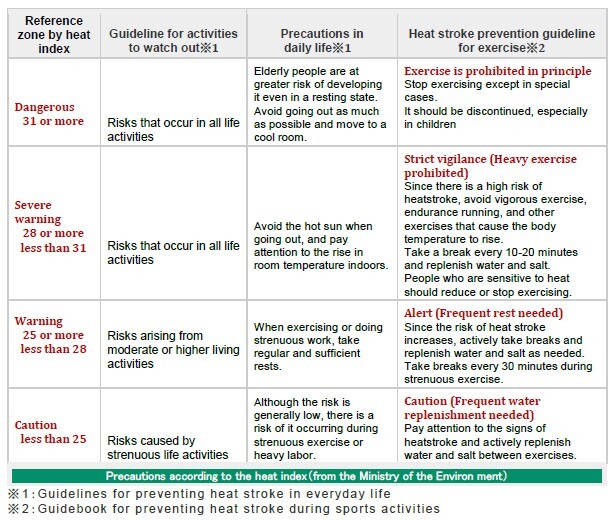
"Temperature" is important as a condition that causes heat stroke, but in Japan's hot and humid environment, the risk of heat stroke cannot be evaluated based on temperature alone. The heat index (WBGT) issued by the Ministry of the Environment focuses on the exchange of heat (heat balance) between people and the outside air. It is especially used to prevent heatstroke during work and exercise.
Please check the heat index as a guideline for heatstroke prevention.
Heat strokel alert
A "Heatstroke Alert" is issued on days when the risk of heatstroke is expected to be extremely high (with a Heat Index of 33 or higher).
Please frequently check for information regarding heatstroke via television or the Ministry of the Environment's Heatstroke Alert information (available in Japanese and English; opens in a new window):
If a Moderate Heatstroke Alert is issued, notifications will be broadcast via the municipal disaster prevention radio system at 10;00 a.m. on the day of issuance and also sent via the Nagahama City email distribution service (Japanese).
We invite you to register for the Nagahama City email distribution service.
Informational Brochure (English Version)
https://www.city.nagahama.lg.jp/00000011937.html
Precautions During Heatstroke Alerts
Preventive Actions When a Heatstroke Alert Is Issued
https://www.city.nagahama.lg.jp/cmsfiles/contents/0000004/4952/keikaiara-toyobou.pdf
Use air conditioning properly
○ Use air conditioning or similar equipment to regulate the temperature, both day and night.
Check on those at high risk of heatstroke
○ The elderly, children, individuals with pre-existing medical conditions, those who are obese, and people with disabilities are at higher risk of heatstroke.
People close to these individuals should encourage them to use air conditioning (including at night) and to frequently replenish fluids and salt.
Take extra precautions to prevent heatstroke.
○ Replenish fluids and salt frequently, even before you feel thirsty (aim for 1.2 liters per day).
○ Wear cool, lightweight clothing.
Avoid going out and stay away from the heat as much as possible.
○ Avoiding the heat is the most important step in preventing heatstroke.
○ Refrain from non-essential outings as much as possible.
As a general rule, cancel or postpone outdoor exercise.
○ In principle, cancel or postpone exercise—whether outdoors or in indoor spaces without air conditioning—based on the local Heat Stress Index (WBGT).
About the Special Heatstroke Alert
Starting April 24, 2024, in addition to the standard "Heatstroke Alert," a higher-level "Special Heatstroke Alert" was introduced for situations where there is a risk of more severe health impacts.
What is a special heatstroke alert?
A special heatstroke alert is issued when the heat index in all areas of Shiga Prefecture reaches 35.
When a special heatstroke alert is issued, it is said that unprecedentedly dangerous heat will cause a large number of people to be taken to hospital with heatstroke, and serious damage to human health may occur, such as disrupting the provision of medical care.
If a Special Heatstroke Alert is issued, please protect your own life and the lives of those around you.
Everyone should ensure they spend time in a cool environment; additionally, those around individuals at higher risk of heatstroke—such as the elderly and infants—are asked to verify that these individuals are staying in cool conditions, such as in air-conditioned rooms. Standard heatstroke prevention measures may prove insufficient under current conditions, so it is essential to exercise heightened vigilance and take appropriate preparatory and responsive actions.
If a Special Heatstroke Alert is issued, notifications will be broadcast via the municipal disaster prevention radio system on the day prior to the alert taking effect, and will also be sent through the Nagahama City email distribution service (in Japanese).
1sp_alert_leaflet.JPG)
2sp_alert_leaflet.JPG)
Email notifications regarding heat index and heatstroke alerts
Ministry of the Environment provides an email distribution service (in Japanese) that provides heat index and heatstroke warning alerts, so please use this to prevent heatstroke.
Ministry of the Environment: Heat Index Email Distribution Service
Heat Illness Prevention Information provided by MoE (env.go.jp)
Ministry of the Environment: Heatstroke Warning Alert Email Distribution Service
Heat Illness Prevention Information provided by MoE (env.go.jp)
Ministry of the Environment: Heatstroke warning alerts and heat index information distribution using the LINE app
Heat Illness Prevention Information provided by MoE (env.go.jp)
Prevention of heat stroke
Temperatures are expected to rise and the severe heat will continue.
Elderly people, children, and people with disabilities are particularly susceptible to heatstroke and need to be especially careful.
Learn the proper prevention methods to prevent heatstroke. Also, make sure to eat well, rest well, and keep your body in good condition.
[Preventing heatstroke]
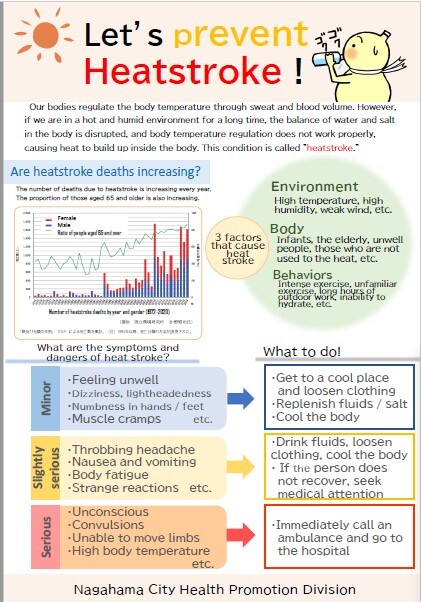
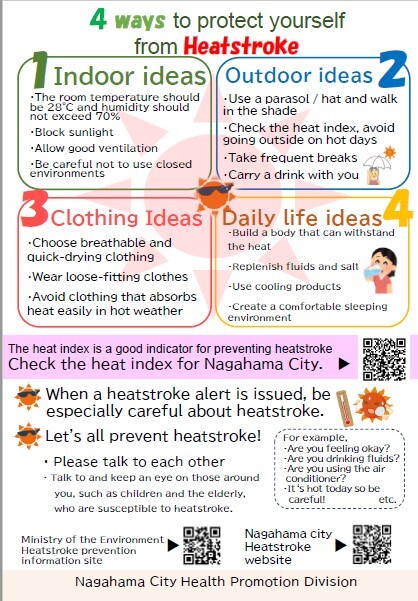
Preventing heatstroke
Ministry of Health, Labor and Welfare: Preventing heat stroke
https://www.city.nagahama.lg.jp/cmsfiles/contents/0000004/4952/necchushoyobou-kouseiroudou.pdf
English:
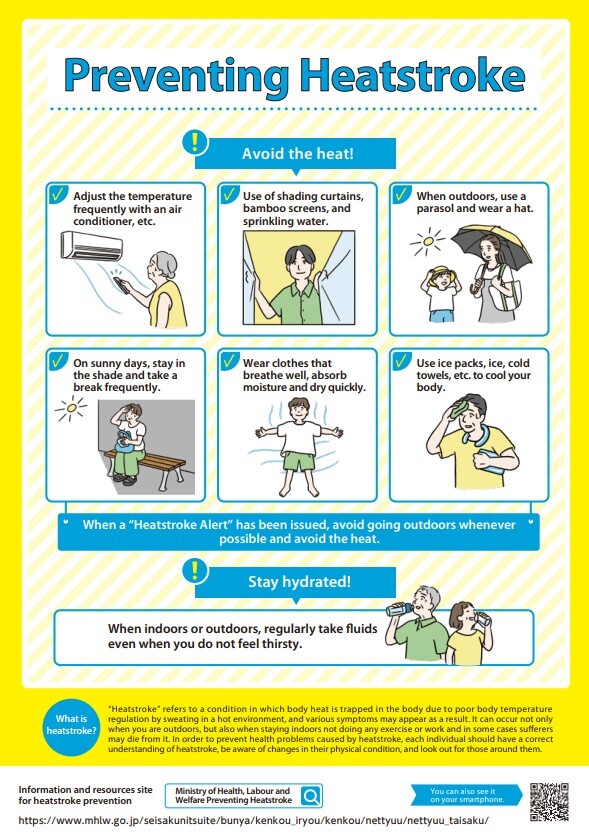
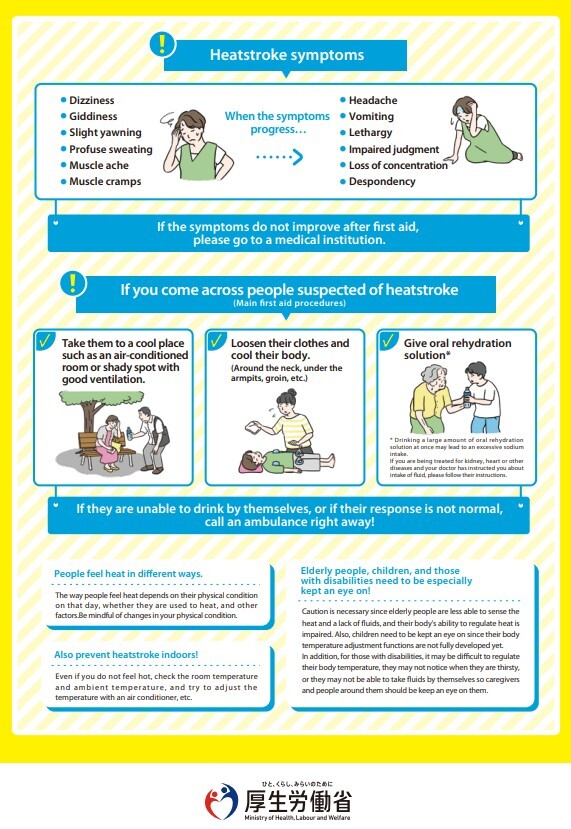
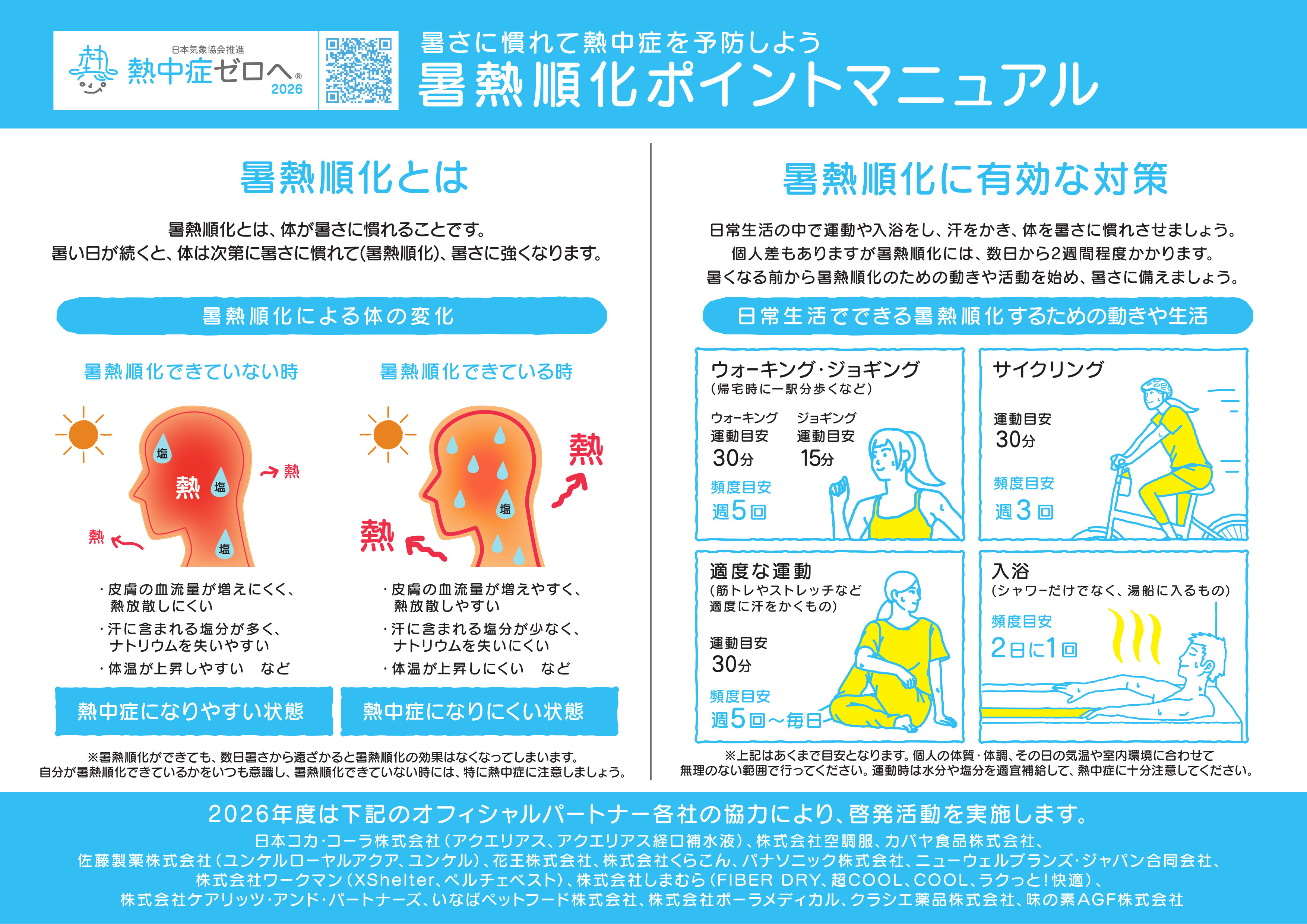
Focus on heat acclimatization before the weather gets hot (Heatstroke prevention from late April through May)
You need to be careful about heatstroke in May, when temperatures can suddenly rise. Before the full heat of summer arrives, start "heat acclimatization"—the process of getting your body used to the heat.
While it varies by individual, heat acclimatization takes about two weeks, so it is best to start thinking about it early.
To reactivate sweat glands that have been dormant during the winter, try soaking in a bathtub or engaging in light exercise that makes you break a sweat.
※Sweating allows the body to dissipate heat, making it effective for preventing heatstroke.
Source: "Towards Zero Heatstroke" initiative promoted by the Japan Weather Association
Before summer is in full swing, make sure to run a test operation and clean your air conditioner.
To prevent heatstroke at home, please run a test operation of your air conditioner early, before the peak of summer arrives.
Repair and installation services become extremely busy during the height of summer.
In July and August—months when requests typically surge—there may be a delay before the work can be carried out. To avoid having to go without air conditioning during the heat, please perform the manufacturer-recommended test run early to check for any malfunctions.
20210423_alert_leaflet.JPG)
Precautions when working outdoors
1. Avoid working on days when you are not feeling well.
2. Make sure to find shade and take regular breaks.
3. Whenever possible, work in groups of two or more people, checking each other's physical condition.
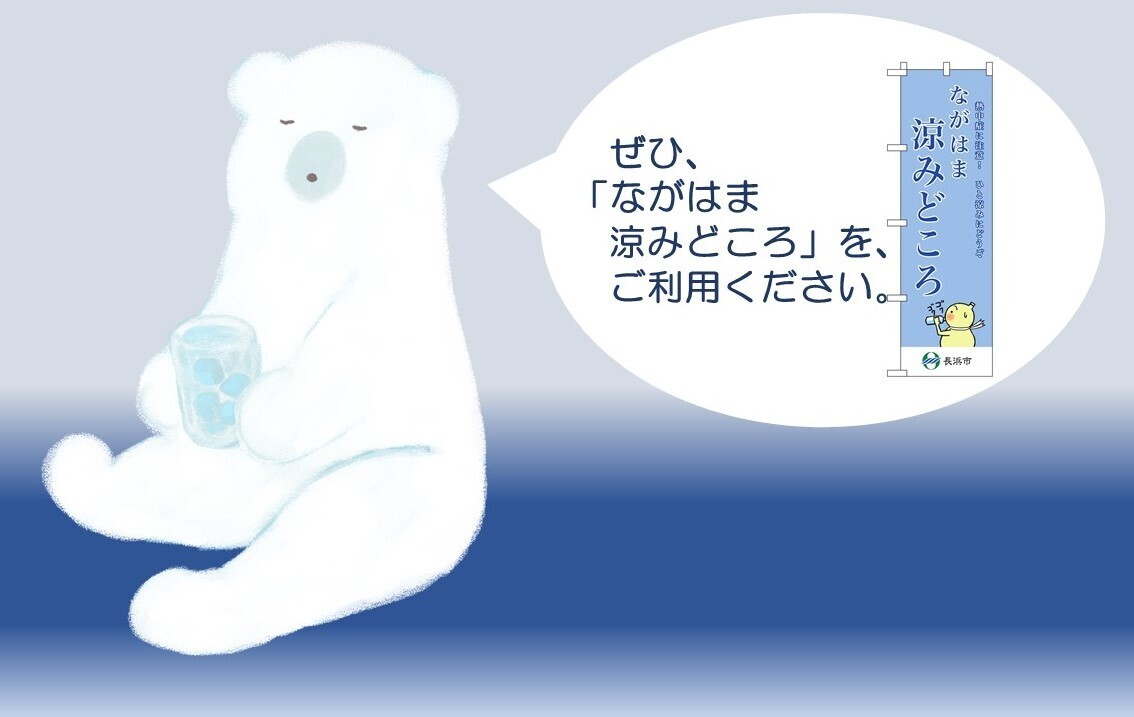
Please use "Nagahama Cool Spots"
In recent years, the number of people who have been rushed to hospital due to heat stroke has exceeded tens of thousands nationwide, and the number of deaths has remained high at over 1,000 per year.
In response to this situation, we will be implementing the "Nagahama Cool Spots" initiative, which will utilize public and commercial facilities within the city and encourage residents to use them to temporarily escape the heat and prevent heat stroke. Please feel free to use the facilities.
※When using the facilities, please follow the rules of each facility and the instructions of staff.
[Period] June 1 (Monday) – September 30 (Wednesday), 2026
Click on the link below to see more details about "Nagahama Suzumi-dokoro / Nagahama Cool Spots."(Japanese)
https://www.city.nagahama.lg.jp/0000014127.html
What to do if someone gets heat stroke
1. If the person is conscious and responding normally
Evacuate to a cool place → Remove clothing and cool the body → Replenish fluids and salt
※If the person cannot drink water on their own or symptoms do not improve, call an ambulance immediately
2. If the person is unconscious or unresponsive
Call an ambulance → Evacuate to a cool place → Remove clothing and cool the body → Transport to a medical facility
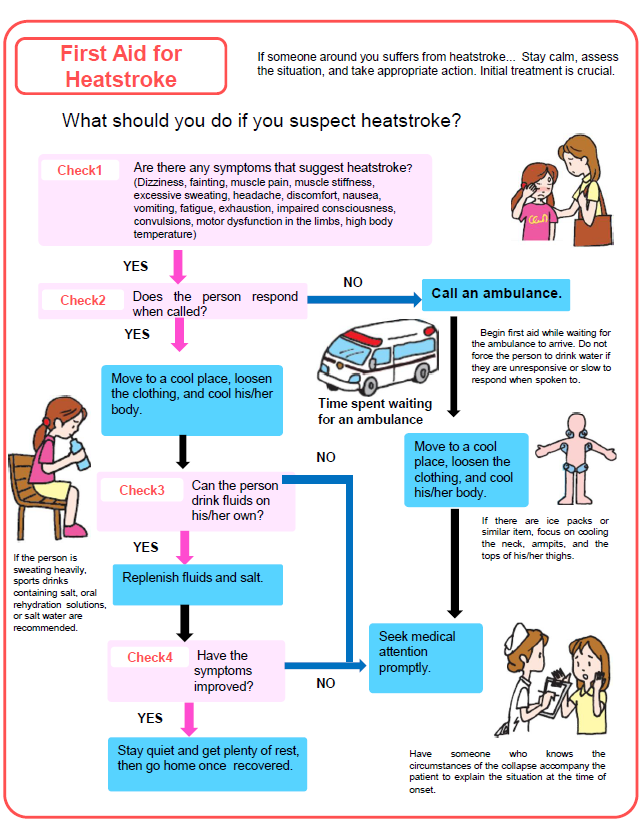
First Aid
 (PDF形式、79.04KB)
References
Ministry of the Environment: Heatstroke Prevention Site
Heat Illness Prevention Information provided by MoE (env.go.jp)
Ministry of Health, Labor and Welfare: Information and resource site for preventing heatstroke(Japanese)
https://www.mhlw.go.jp/seisakunitsuite/bunya/kenkou_iryou/kenkou/nettyuu/nettyuu_taisaku/
Shiga Prefecture: Heatstroke Prevention (Japanese)
https://www.pref.shiga.lg.jp/ippan/kenkouiryouhukushi/kenkou/15153.html
お問い合わせ
長浜市市民協働部市民活躍課
電話: 0749-65-8711
ファックス: 0749-65-6571
電話番号のかけ間違いにご注意ください!